
Register your Private Limited Company in India — CA-led, fully online
Name approval, DSC, DIN, MOA/AOA drafting and MCA filing, handled by a named CA or CS. Transparent professional fees, with government fees itemised separately.
Starter
You're registered
- Name reservation
- DSC and DIN for 2 directors
- MOA and AOA drafted with custom clauses
- SPICe+ filed with MCA
- Certificate of incorporation
- PAN and TAN
- EPFO and ESIC registration, professional tax (state-dependent)
- INC-20A commencement filed (within 180 days)
- First auditor appointed (within 30 days)
- Share certificates issued and stamped (within 60 days)
- A named CA or CS on your project
Launch
You're operational
- Everything in Starter — incorporation, PAN, TAN, first auditor, share certificates, INC-20A
- GST registration
- MSME Udyam registration
- Shop Act registration (as per state rules)
- A named CA or CS on your project
Growth
You're ROC-compliant for year one
- Everything in Launch — incorporation, all registrations, first filings
- ROC compliance, first financial year
- Director's report drafted
- AOC-4, financial statements filed
- MGT-7 / MGT-7A (as applicable), annual return filed
- DIR-3 KYC for every director
- A named CA or CS on your project
Our ROC annual compliance service is ₹17,988 a year on its own. Included here.
Not included: statutory audit fee, bookkeeping, ITR-6 and GST/TDS returns.
Note: Not sure which package to choose? Launch is the popular option for founders who need to invoice and register for GST in the first months. Talk to a CA if you need help deciding. Government fees are charged at actuals and itemised separately before you pay — they are not fixed within the professional fee shown above.
Ideal For
Is a Private Limited Company right for you? These are the founders it typically suits.
Startup Founders
A suitable structure for businesses planning external investment or long-term growth.
Freelancers & Consultants
Create a separate business entity when clients, contracts or growth require a formal company structure.
SME & Family Business
A structured entity for businesses planning to scale operations over time.
NRIs & Foreign Nationals
Directors and shareholders can include NRIs and foreign nationals, subject to FDI rules, with at least one director resident in India.
E-Commerce Sellers
A registered entity that many marketplaces and payment gateways prefer for seller onboarding.
Agencies & Service Businesses
A formal structure for businesses working with clients that require vendor registration.
Not sure Pvt Ltd is the right fit? Compare it with an LLP or OPC, or take the free business structure quiz.
Why Choose StartBusiness?
CA-led incorporation support, pre-filing review, and 100% itemised billing — built for founders who value speed and compliance.
CA-Led Incorporation Support
Your filing is handled by a qualified CA or CS, not a generic ticket queue.
Pre-Filing Document Review
Applications are checked before submission to reduce MCA resubmissions.
Transparent Professional Fees
Government fees and GST are itemised and shown separately.
Fully Online Process
No office visits required to complete registration.
Dedicated Support on Your File
A single point of contact for queries during the process.
Post-Incorporation Guidance
Support on next steps such as bank account setup and initial compliance.
What is a Private Limited Company?
A Private Limited Company is a separate legal entity registered under the Companies Act, 2013, owned by shareholders and managed by directors. Owners' liability is limited to the unpaid amount on the shares they hold. There is no minimum paid-up capital, a company can have up to 200 members, and it is commonly used by businesses planning to raise external investment. For a side-by-side look at the alternatives, read our guide to choosing a business structure.
2
Minimum directors
2
Minimum shareholders
7–15
Working days, typical timeline
Online
Fully online process
Separate
Legal entity, limited liability
MCA
Certificate of Incorporation
The same two people can be both directors and shareholders. At least one director must be resident in India (stayed 182 days or more in India during the financial year), and a company can have up to 15 directors.
Why 1,000+ Founders Trust StartBusiness
From documentation to MCA approvals, our experts manage every step of your incorporation—so you can focus on building your business instead of paperwork.
Founders Served
Across India with CA/CS support.
Working Days
Typical incorporation timeline.
Dedicated CA/CS
Named professional on your file.
Itemised Billing
No hidden charges, fees at actuals.
StartBusiness vs DIY vs Traditional CA
See how StartBusiness compares to DIY registration and traditional CA firms.
DIY/MCA and traditional CA routes are both valid paths to registration — this table compares what's included with each, not their reliability.
Documents Required
Commonly required documents. Some requirements can vary based on individual circumstances.
Directors
- PAN card
- Aadhaar card
- Passport-size photograph
- Address proof (bank statement or utility bill, not older than 2 months)
- Mobile number linked with Aadhaar
- Email ID
Registered Office
- Rent agreement or ownership document
- Utility bill (not older than 2 months)
- NOC from property owner, where applicable
- Other supporting documents as required
What You Get:
Full-Service Private Limited Company Setup
You provide your documents. We handle everything else — every form, every filing, every follow-up with government portals — until your business is live.
Documents We Prepare for You
- Name reservation application
- Digital Signature Certificates (DSC) for 2 directors
- Director Identification Numbers (DIN) for 2 directors
- MOA and AOA drafted with custom clauses
- SPICe+ and AGILE-PRO-S filing with MCA
- First auditor appointment support (within 30 days)
- Share certificates issued and stamped (within 60 days)
Registrations We File
- Certificate of Incorporation from MCA
- Company PAN and TAN
- EPFO and ESIC registrations
- Professional tax registration (state-dependent)
- INC-20A business commencement filing (within 180 days)
- GST & MSME registrations (Launch & Growth plans)
Your Registration, Step by Step
A clear timeline from document upload to certificate — no guesswork, no waiting in the dark.
Name Reservation
Apply for name reservation on the MCA portal with up to 2 name options.
DSC
Obtain Digital Signature Certificates for the proposed directors and subscribers.
MOA & AOA Drafting
Draft the Memorandum and Articles of Association, filed as e-MOA and e-AOA along with SPICe+.
SPICe+ Filing
File SPICe+ with AGILE-PRO-S on the MCA portal. DIN is allotted to new directors through this filing.
Certificate of Incorporation, PAN & TAN
Receive your Certificate of Incorporation from the MCA, with the company PAN and TAN.
Registrations & Bank Account
EPFO and ESIC numbers are issued with incorporation, professional tax in eligible states, and the current bank account is opened.
Actual timelines can vary depending on document readiness, name approval and MCA/government processing. Questions about a step? Talk to a CA.
What Happens After Registration?
Incorporation is the starting point. Depending on your business, next steps typically include:
- Opening a current bank account in the company's name
- Holding the first board meeting within 30 days
- Appointing the first auditor within 30 days
- Issuing share certificates within 60 days
- Filing INC-20A (commencement of business) within 180 days
- Registering for GST, where applicable to your turnover or business activity
- Maintaining statutory registers
- Completing annual ROC filings (AOC-4, MGT-7 / MGT-7A)
- DIR-3 KYC for every director
- Income tax compliance

Not Sure Where to Begin?
Let's Talk.
Get a free 15-minute consultation with a qualified CA to understand your entity options, the registration process, and expected costs.
Talk to an ExpertFrequently Asked Questions
Got questions? Find quick, expert answers to everything you need to know before getting started
A Private Limited Company is a separate legal entity registered under the Companies Act, 2013, owned by shareholders and managed by directors. Owners' liability is limited to the unpaid amount on their shares, which makes it the usual choice for businesses planning to raise investment.
Our professional fee is ₹9,999 for Starter, ₹14,999 for Launch and ₹24,999 for Growth, including DSC for 2 directors. Government fees are charged at actuals: the MCA filing fee is nil for authorised capital up to ₹15 lakh, so the main government cost is state stamp duty. 18% GST applies on the professional fee. Every component is itemised before you pay. Ask for a written quote.
Typically 7–15 working days from the time your documents are complete. Name approval and MCA processing times can move this in either direction.
For each director and shareholder: PAN, Aadhaar, a photograph, address proof (not older than 2 months), an Aadhaar-linked mobile number and an email ID. For the registered office: a rent agreement or ownership document, a utility bill not older than 2 months and, where applicable, an NOC from the property owner. NRI and foreign national directors or shareholders also need a passport and notarised or apostilled documents.
No. There is no minimum paid-up capital for a Private Limited Company. Many founders start with ₹1 lakh authorised capital, which keeps the MCA filing fee nil; stamp duty depends on your state.
Yes. The Companies Act does not stop a salaried person from being a director. Check your employment contract for any restriction on outside directorships or business activities.
Yes. A residential address can be used as the registered office with a recent utility bill and an NOC from the owner. If the property is rented, the rent agreement is also needed.
A Pvt Ltd suits businesses planning to raise equity investment, but has more compliance. An LLP has lighter compliance but cannot issue shares to investors. An OPC suits a single founder who wants limited liability with one owner.
Yes. NRIs and foreign nationals can be directors and shareholders, subject to FDI rules for the sector. At least one director must be resident in India. If you are weighing a Pvt Ltd against an LLP for a foreign-owned venture, a CA can walk you through the FDI rules for each.
Not always. GST registration becomes mandatory once turnover crosses ₹40 lakh for goods or ₹20 lakh for services (lower limits apply in special category states), or earlier for activities such as inter-state supply of goods. Small sellers on e-commerce marketplaces can, subject to conditions, sell within their own state without GST registration. GST registration is included in the Launch and Growth plans, or available on its own as GST registration. Use our GST calculator to work out tax on your invoices.
You'll open a current bank account, appoint the first auditor, issue share certificates, file INC-20A within 180 days, register for GST if needed, maintain statutory registers and complete annual ROC and income tax filings. The Growth plan covers ROC filings for the first financial year; after that, see our ROC annual compliance service.

“StartBusiness made our LLP registration incredibly simple. They handled all legal requirements and paperwork efficiently. Highly recommended for any new founders.”
Mr. Hemant Patil
Apaha Institute Of Construction Project Management LLP
“StartBusiness made our LLP registration incredibly simple. They handled all legal requirements and paperwork efficiently. Highly recommended for any new founders.”
Mr. Hemant Patil
Apaha Institute Of Construction Project Management LLP
Blogs & Guides
Explore practical guides, compliance checklists, and expert tax insights written by CAs to help you make smarter business decisions.
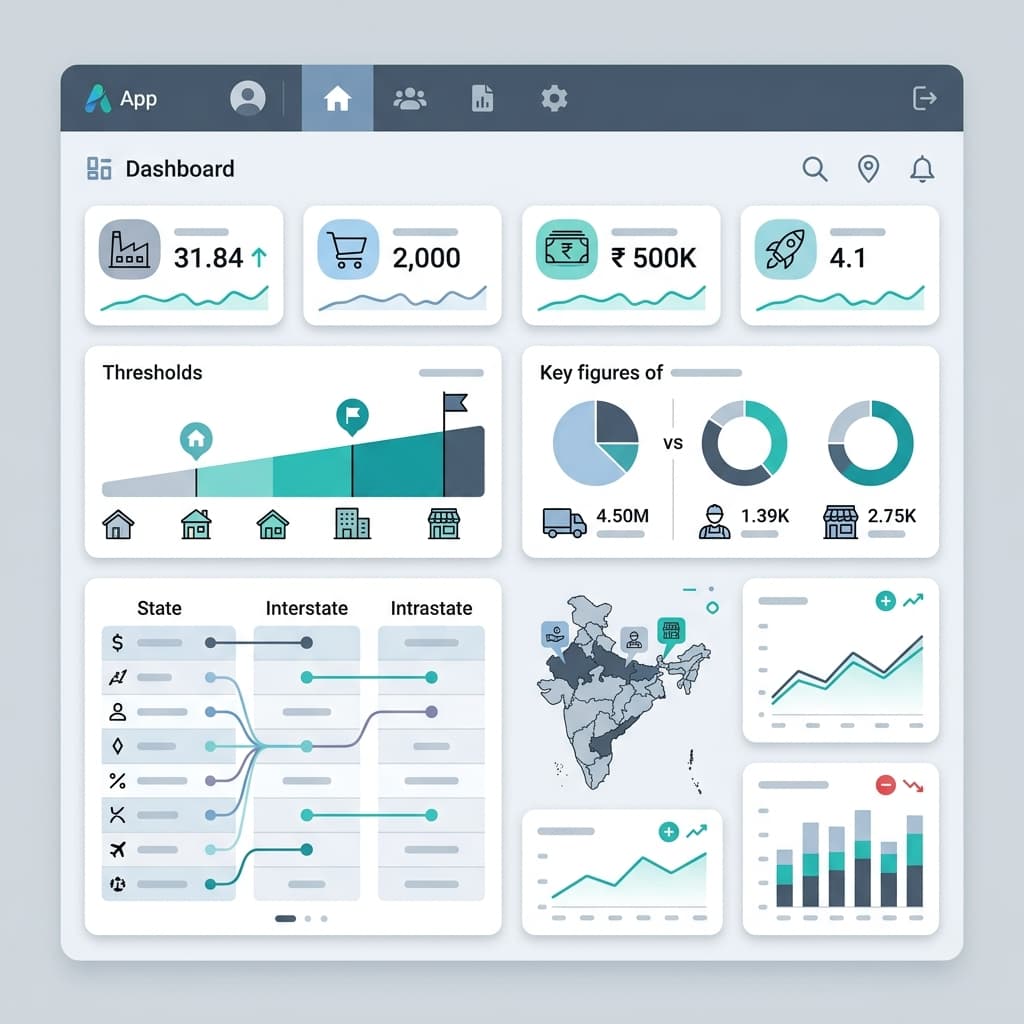
GST Registration Turnover Limit in India: Thresholds, Eligibility & Rules
Do you need GST registration? Learn the ₹20 lakh & ₹40 lakh turnover limits and when registration is mandatory.
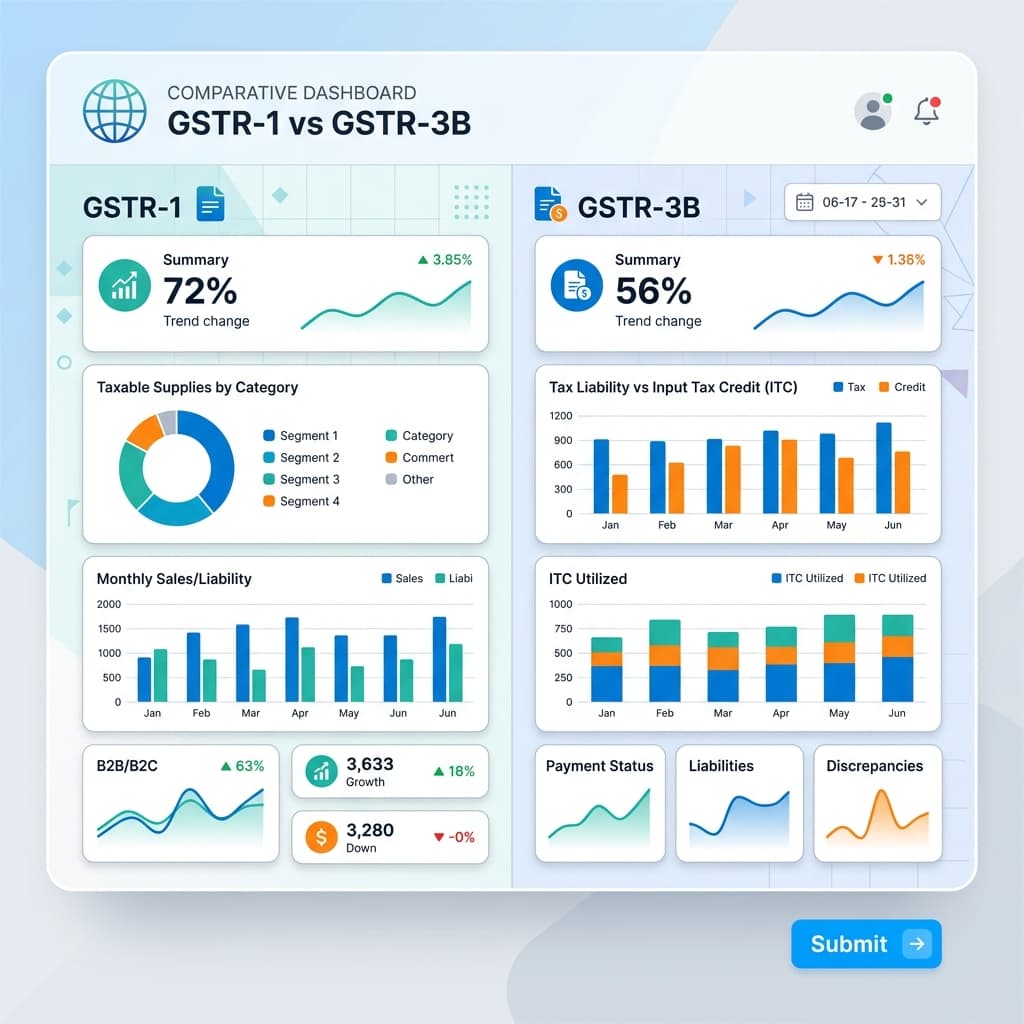
Presumptive Taxation in India: Sections 44AD, 44ADA & 44AE
Confused about presumptive taxation? Learn Section 44AD, 44ADA & 44AE with eligibility and tax details.
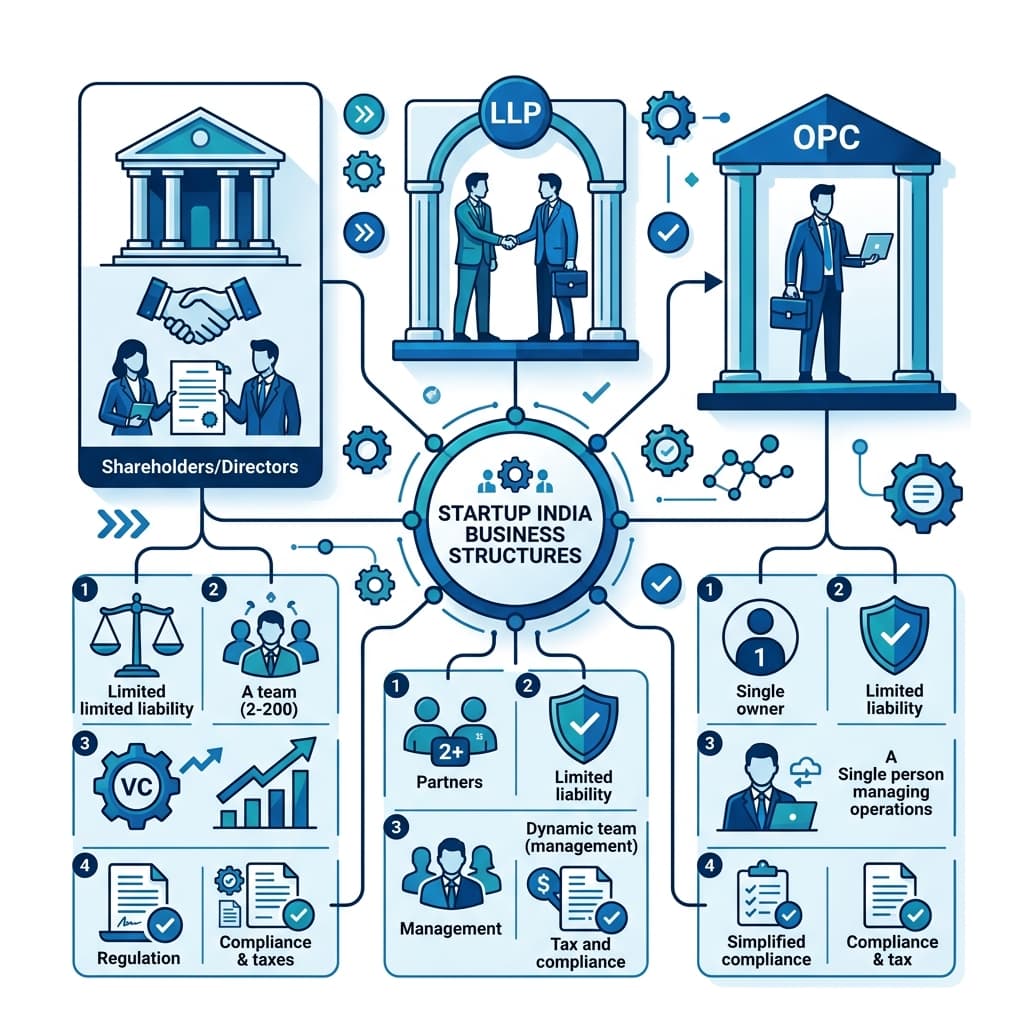
How Much Does It Cost to Register a Company in India?
Government fees, professional fees and hidden costs of registering a Private Limited Company, LLP or OPC.

Start Your Business Journey
in Under 15 Minutes.
Get a free 15-minute consultation with a senior CA. Clear answers on entity types, timelines, and costs - with zero sales pressure.