
Partnership Firm Registration
Create a partnership between two or more individuals to run a business together with shared profits, losses, and responsibilities.
Starter
Get your firm registered quickly with the essentials
- Partnership Deed drafting (2–5 partners)
- Registration with Registrar of Firms
- Firm PAN application
- GST Registration
Professional
Complete registration plus compliance and banking readiness
- Everything in Starter
- MSME/Udyam Registration
- Shop & Establishment Registration
- Bank account opening guidance
Growth
Full registration, compliance, and future-proofing for scaling firms
- Everything in Professional
- LLP conversion advisory
- Annual ITR filing for the firm
- Partner KYC compliance
Ideal For
Whether you're launching your first venture or scaling an established business, a Partnership Firm offers the flexibility and credibility to grow with confidence.
Family Businesses
Partnership is the natural legal structure for family-run businesses where two or more members want a formal arrangement for profit sharing, succession, and banking — without the complexity of a private limited company.
Trading Businesses — Import, Export & Wholesale
Traders dealing in goods — whether import-export or domestic wholesale — benefit from the firm's recognized status with customs, GST authorities, and trade finance lenders, while keeping compliance obligations lean.
Medical Clinics and Diagnostic Centres
Two or more doctors or healthcare professionals starting a clinic or diagnostic centre together commonly register as a Partnership Firm, which is widely accepted by medical councils, insurance empanelment bodies, and equipment vendors.
Construction and Contracting
Civil contractors, interior designers, and construction firms frequently operate as partnerships to pool capital for equipment and working capital, bid for government tenders, and share project liabilities across multiple partners.
Accounting and Consulting Professionals
CA firms, tax consultants, management consultants, and legal professionals who collaborate formally use Partnership Firms to pool expertise, share client relationships, and present a credible professional identity to clients.
Coaching Institutes and Training Centres
Educators and trainers co-founding coaching centres or skill development institutes use Partnership Firms to formalise their arrangement, open bank accounts, issue receipts, and build a brand without the overhead of a company structure.
Why Choose a
Partnership Firm?
Liability Protection
Protect your personal assets from business liabilities.
Investor & Funding Ready
Built to attract investors and raise capital with confidence.
Separate Legal Entity
Operate as an independent business with lasting legal identity.
Better Tax & Business Benefits
Unlock tax advantages and support long-term business growth.
Strong Business Credibility
Build trust with customers, banks, and business partners.
What is a Partnership Firm?
A Partnership Firm is a business structure where two or more individuals come together to carry on a business with a common goal of earning profits. Partners share profits, losses, and management responsibilities as per the partnership agreement.
Why 1,000+ Founders Trust StartBusiness
From documentation to MCA approvals, our experts manage every step of your incorporation—so you can focus on building your business instead of paperwork.
Day Turnaround
Estimated incorporation timeline.
Dedicated CA
A single expert from start to finish.
Pre-Filing Review
Every application is reviewed before submission.
Hidden Charges
Clear pricing with government fees at actuals.
Compliance Kit
Everything you need for your Partnership Firm.
Compare Your Registration Options
See how StartBusiness compares to DIY registration and traditional CA firms.
Documents for Partnership Firm Registration
Partner KYC, partnership deed, and address proof requirements.
Directors / Owners
- GST Registration (if applicable)
- Partnership Deed
- PAN cards of all partners
- Aadhaar cards of all partners
- Passport size photographs
- Address proof of partners
- Address proof of business premise
- Bank account documents
Registered Office / Business Address
- Rent agreement/ownership deed
- Utility bills (not older than 2 months)
- NOC from property owner
- Property tax receipt
- Municipality trade license
- Office photographs
What You Get:
Full-Service Partnership Firm Setup
You provide your documents. We handle everything else — every form, every filing, every follow-up with government portals — until your business is live.
Documents We Prepare for You
- Partnership Deed — professionally drafted
- State Registrar registration application
- GST application documents
- MSME application documents
- Firm PAN application
Registrations We File
- Deed registration with Registrar of Firms
- GST Registration
- MSME/Udyam Certificate
- Shop & Establishment (select plans)
- Firm PAN card
Your Registration, Step by Step
A clear timeline from document upload to certificate — no guesswork, no waiting in the dark.
Partnership Agreement
Draft comprehensive partnership deed defining terms
Name Search
Search and finalize firm name availability
Registration
File application with Registrar of Firms
Certificate
Obtain Certificate of Registration
Other Registrations
Apply for PAN, bank account, and other licenses

Not Sure Where to Begin?
Let's Talk.
Get a free 15-minute consultation with a senior CA. Clear answers on entity types, timelines, and costs — with zero sales pressure.
Talk to an ExpertFrequently Asked Questions
Got questions? Find quick, expert answers to everything you need to know before getting started
No, registration with the Registrar of Firms is not legally mandatory under the Indian Partnership Act, 1932. However, an unregistered firm has significant legal disadvantages — it cannot file suits against third parties to enforce contracts, and partners cannot file suits against each other or the firm. For all practical purposes (bank accounts, tenders, client contracts), registration is strongly recommended and effectively essential.
A Partnership Firm must have a minimum of 2 partners. The maximum is 50 partners as per the Companies Act, 2013. For banking businesses, the limit is 10 partners. All partners must be individuals; corporate bodies cannot be partners in a registered Partnership Firm (unlike an LLP).
The primary difference is liability: in a Partnership Firm, all partners have unlimited personal liability for the firm's debts, whereas in an LLP each partner's liability is limited to their agreed capital contribution. An LLP is also a separate legal entity (the firm itself can sue and be sued), while a Partnership Firm has no separate legal identity in the same way. LLPs have slightly higher compliance requirements (annual filing with MCA) but provide far greater protection for partners' personal assets.
Yes. The LLP Act, 2008 provides a specific procedure for converting a registered Partnership Firm into an LLP. The process involves obtaining partner consent, filing Form 17 with MCA, obtaining an LLP Incorporation Certificate, and then transferring assets, PAN, GST registration, and bank accounts. StartBusiness offers a dedicated Partnership-to-LLP Conversion service to manage the entire process with CA guidance.
A registered Partnership Firm is treated as a separate taxable entity. The firm pays income tax at a flat rate of 30% on its net profits (plus applicable surcharge and cess). The firm can deduct partner salaries and interest on capital (subject to limits under Section 40(b) of the Income Tax Act) before arriving at taxable income. Partners are not separately taxed on their share of firm profits (as this is exempt under Section 10(2A)), but remuneration and interest received from the firm are taxable in the hands of the partner.
An NRI (Non-Resident Indian) can be a partner in an Indian Partnership Firm, but investments and profit repatriations must comply with FEMA (Foreign Exchange Management Act) regulations. Foreign nationals who are not Indian citizens generally require RBI approval before becoming partners. Given the regulatory complexity, NRIs and foreign nationals looking to do business in India typically prefer the LLP or Private Limited Company structure, which have clearer FEMA/FDI guidelines.

“StartBusiness made our LLP registration incredibly simple. They handled all legal requirements and paperwork efficiently. Highly recommended for any new founders.”
Mr. Hemant Patil
Apaha Institute Of Construction Project Management LLP
“StartBusiness made our LLP registration incredibly simple. They handled all legal requirements and paperwork efficiently. Highly recommended for any new founders.”
Mr. Hemant Patil
Apaha Institute Of Construction Project Management LLP
Blogs & Guides
Explore practical guides, compliance checklists, and expert tax insights written by CAs to help you make smarter business decisions.

GST Registration Turnover Limit in India: Thresholds, Eligibility & Rules
Do you need GST registration? Learn the ₹20 lakh & ₹40 lakh turnover limits and when registration is mandatory.
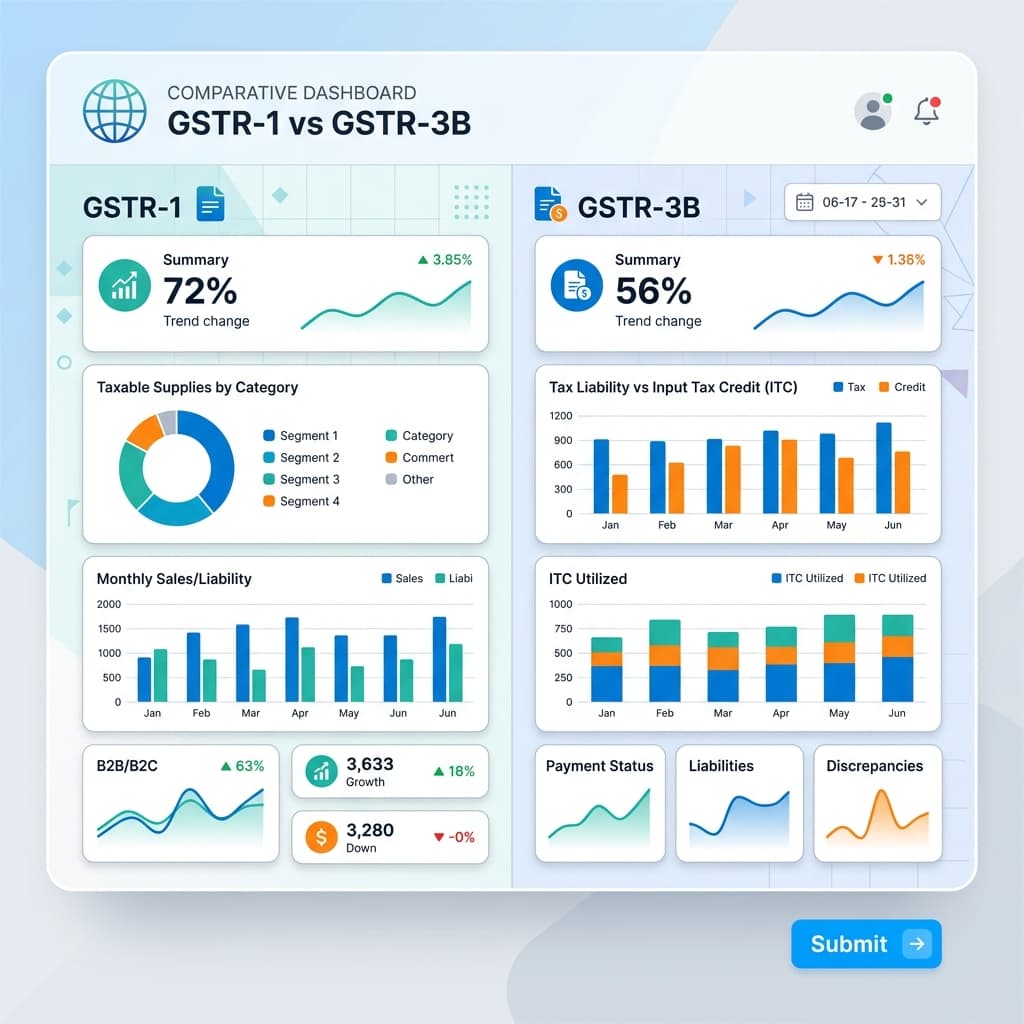
Presumptive Taxation in India: Sections 44AD, 44ADA & 44AE
Confused about presumptive taxation? Learn Section 44AD, 44ADA & 44AE with eligibility and tax details.
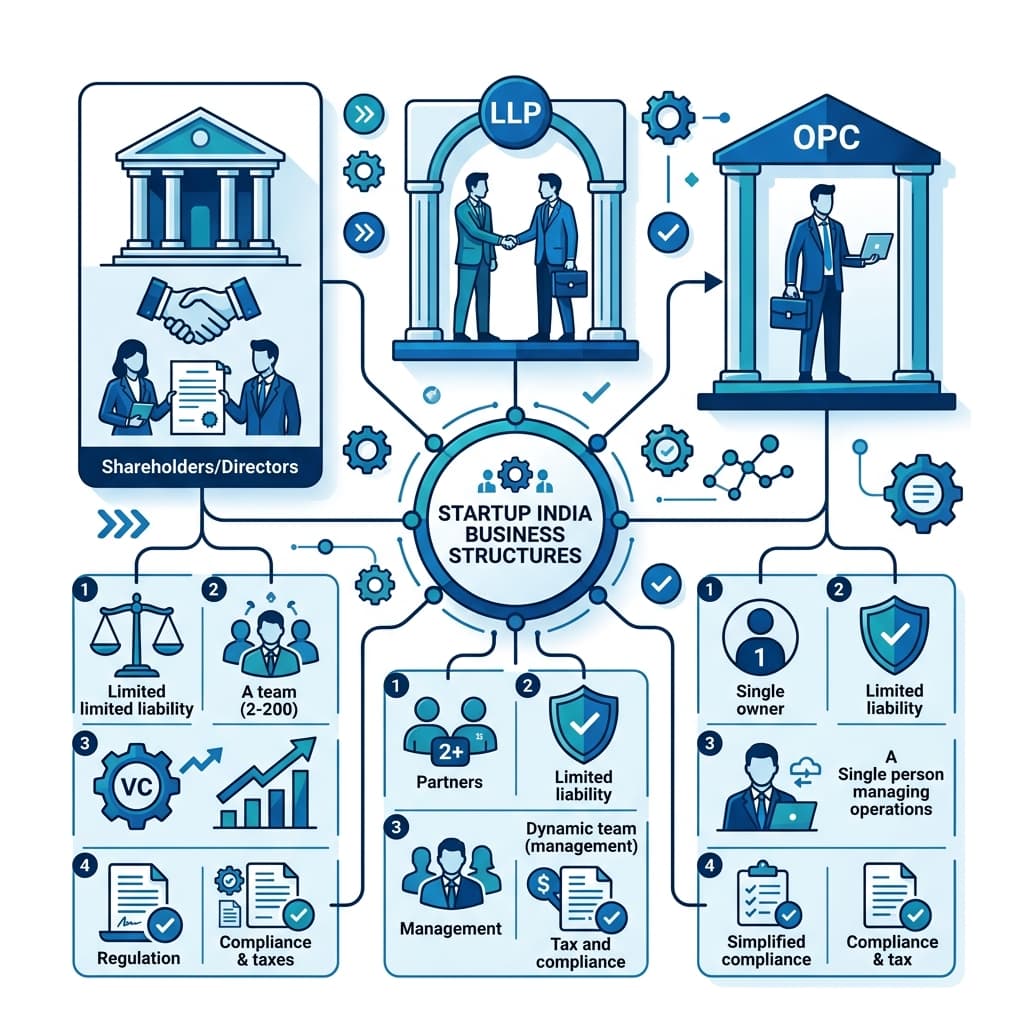
How Much Does It Cost to Register a Company in India?
Government fees, professional fees and hidden costs of registering a Private Limited Company, LLP or OPC.

Start Your Business Journey
in Under 15 Minutes.
Get a free 15-minute consultation with a senior CA. Clear answers on entity types, timelines, and costs - with zero sales pressure.