
Subsidiary of a Foreign Company Registration
Establish a subsidiary of your foreign company in India to expand your business operations with complete legal compliance.
Starter
Core incorporation for foreign-owned companies entering India
- 1 Indian resident director + foreign director
- DIN + DSC
- MOA & AOA (foreign shareholding structure)
- SPICe+ form filing
- Certificate of Incorporation
- PAN + TAN
- FC-GPR RBI filing guidance
Professional
Full setup with GST, MSME, and FDI compliance included
- Everything in Starter
- GST Registration
- MSME Registration
- FC-GPR (FDI reporting to RBI)
- Registered office setup assistance
Growth
Complete FEMA compliance and transfer pricing readiness
- Everything in Professional
- Sector-specific FDI compliance advisory
- RBI liaison support
- Transfer pricing documentation setup
- Annual FEMA compliance package
What is a Subsidiary of Foreign Company?
A subsidiary of a foreign company is an Indian company where the foreign company holds more than 50% of the paid-up share capital. It operates as a separate legal entity in India while being controlled by the foreign parent company.
Ideal For
Whether you're launching your first venture or scaling an established business, a Foreign Subsidiary offers the flexibility and credibility to grow with confidence.
Foreign Companies Expanding to India
Whether you are a multinational expanding geographically or a regional company entering South Asia, incorporating an Indian subsidiary is the cleanest, most compliant way to establish a permanent, revenue-generating presence without exposing your parent entity to Indian regulatory risk.
International Tech Companies
Software, SaaS, and technology companies looking to hire Indian engineering talent, serve Indian enterprise customers, or build an offshore development centre benefit greatly from a formal Indian subsidiary — enabling local payroll, GST invoicing, and access to Indian government tech contracts.
Manufacturing and Production Companies
Foreign manufacturers setting up production facilities, sourcing operations, or contract manufacturing in India need a local entity to hold land/lease agreements, employ workers, and interface with Indian supply chains. A subsidiary provides the legal foundation for all of this activity.
E-Commerce and D2C Brands
International D2C and e-commerce brands selling to Indian consumers must comply with FDI rules for e-commerce, GST, and customs regulations. A properly structured Indian subsidiary enables marketplace listings, direct-to-consumer sales, and local warehousing partnerships under a fully compliant entity.
Professional Services Firms
Consulting firms, legal support companies, marketing agencies, and financial services providers seeking to serve Indian clients under long-term retainers need a local entity for billing, contracting, and regulatory standing. An Indian subsidiary makes client acquisition and service delivery seamless.
R&D Centres and Innovation Labs
Global companies setting up captive R&D units, AI/ML labs, or innovation centres in India leverage the subsidiary structure to access India's DSIR scientific research incentives, hire researchers locally, and hold intellectual property developed in India — while maintaining full parent-company ownership.
Why Choose a
Foreign Subsidiary?
Liability Protection
Protect your personal assets from business liabilities.
Investor & Funding Ready
Built to attract investors and raise capital with confidence.
Separate Legal Entity
Operate as an independent business with lasting legal identity.
Better Tax & Business Benefits
Unlock tax advantages and support long-term business growth.
Strong Business Credibility
Build trust with customers, banks, and business partners.
Why 1,000+ Founders Trust StartBusiness
From documentation to MCA approvals, our experts manage every step of your incorporation—so you can focus on building your business instead of paperwork.
Day Turnaround
Estimated incorporation timeline.
Dedicated CA
A single expert from start to finish.
Pre-Filing Review
Every application is reviewed before submission.
Hidden Charges
Clear pricing with government fees at actuals.
Compliance Kit
Everything you need for your Foreign Subsidiary.
Compare Your Registration Options
See how StartBusiness compares to DIY registration and traditional CA firms.
Documents for Foreign Subsidiary Registration
Parent company documents, apostilled certificates, and director KYC.
Foreign Company
- Certificate of incorporation of foreign company
- Board resolution of foreign company
- Financial statements of foreign company
- Memorandum and Articles of Association
- Certificate of good standing
- Apostilled documents
Indian Subsidiary
- Details of Indian directors
- Registered office address proof
- Fund transfer documents
- Investment proposal
- Bank statements
- FEMA compliance documents
What You Get:
Full-Service Foreign Subsidiary Setup
You provide your documents. We handle everything else — every form, every filing, every follow-up with government portals — until your business is live.
Documents We Prepare for You
- DSC for Indian and foreign directors
- DIN for all directors
- MOA & AOA (foreign shareholding)
- SPICe+ form — prepared & filed
- RBI FDI reporting documents
- Statutory registers setup
Registrations We File
- Name approval on MCA
- Certificate of Incorporation
- PAN + TAN
- FC-GPR (FDI reporting to RBI)
- GST registration (select plans)
- MSME registration (select plans)
Your Registration, Step by Step
A clear timeline from document upload to certificate — no guesswork, no waiting in the dark.
Typical total: 25-35 working days
Step 1
Structure Planning
Plan the subsidiary structure and compliance requirements
Step 2
Name Reservation
Reserve company name with ROC
Step 3
Incorporation
File incorporation documents and obtain certificate
Step 4
FEMA Compliance
Complete RBI reporting and FEMA formalities
Step 5
Banking & Operations
Open bank accounts and commence operations

Not Sure Where to Begin?
Let's Talk.
Get a free 15-minute consultation with a senior CA. Clear answers on entity types, timelines, and costs — with zero sales pressure.
Talk to an ExpertFrequently Asked Questions
Got questions? Find quick, expert answers to everything you need to know before getting started
Yes, in most sectors India permits 100% foreign direct investment (FDI) under the automatic route — meaning no prior approval from the government or RBI is required. Sectors such as IT services, consulting, manufacturing, e-commerce, and R&D all allow full foreign ownership. A few sectors (defence, media, banking, insurance) have FDI caps or require government approval; our team will advise you on which route applies to your business before incorporation begins.
Yes. Section 149(3) of the Companies Act, 2013 requires that every company incorporated in India must have at least one director who has stayed in India for a total of not less than 182 days during the financial year. This is a continuing requirement — not just at the time of incorporation. If the foreign parent does not have an India-based person available, StartBusiness can help you identify and appoint a qualified nominee director to fulfil this statutory obligation.
FC-GPR (Foreign Currency — Gross Provisional Return) is a mandatory RBI filing required under FEMA regulations whenever a company in India allots shares to a foreign investor. After the share allotment to your parent company is recorded, the FC-GPR must be filed through the RBI's FIRMS (Foreign Investment Reporting and Management System) portal within 30 days of the allotment date. It reports the details of the FDI received, the valuation of shares, and the shareholding structure. Our Professional and Growth plans include complete FC-GPR filing support.
Yes, profits can be freely repatriated to the foreign parent company in the form of dividends, provided Indian corporate tax has been paid and the required tax deducted at source (TDS) on dividends is deposited with the Indian tax authorities. There is no RBI approval required for dividend repatriation under the automatic route for most sectors. The subsidiary must also comply with the applicable Double Taxation Avoidance Agreement (DTAA) between India and the parent company's home country to optimise withholding tax on dividends.
The typical timeline ranges from 20 to 45 business days depending on the plan selected and the complexity of the foreign shareholding structure. The process includes name approval on MCA (3–5 days), DSC and DIN procurement for foreign directors (5–10 days), drafting and notarisation/apostille of parent company documents, SPICe+ filing, and post-incorporation registrations such as PAN, TAN, and GST. The notarisation and apostille of foreign directors' documents in their home country is often the longest step, and our team coordinates this process with you proactively.
An Indian subsidiary with foreign investment has two core annual FEMA obligations: (1) FC-GPR filing within 30 days of any new share allotment to foreign investors, and (2) the Foreign Liabilities and Assets (FLA) Return submitted to RBI by 15 July each year, reporting the outstanding FDI position as of 31 March. Additionally, if the subsidiary has related-party transactions with the parent (royalties, management fees, intercompany loans), transfer pricing documentation under the Income Tax Act is required. StartBusiness's annual FEMA compliance package covers all of these filings, keeping your subsidiary audit-ready throughout the year.

“StartBusiness made our LLP registration incredibly simple. They handled all legal requirements and paperwork efficiently. Highly recommended for any new founders.”
Mr. Hemant Patil
Apaha Institute Of Construction Project Management LLP
“StartBusiness made our LLP registration incredibly simple. They handled all legal requirements and paperwork efficiently. Highly recommended for any new founders.”
Mr. Hemant Patil
Apaha Institute Of Construction Project Management LLP
Blogs & Guides
Explore practical guides, compliance checklists, and expert tax insights written by CAs to help you make smarter business decisions.

GST Registration Turnover Limit in India: Thresholds, Eligibility & Rules
Do you need GST registration? Learn the ₹20 lakh & ₹40 lakh turnover limits and when registration is mandatory.

Presumptive Taxation in India: Sections 44AD, 44ADA & 44AE
Confused about presumptive taxation? Learn Section 44AD, 44ADA & 44AE with eligibility and tax details.
How Much Does It Cost to Register a Company in India?
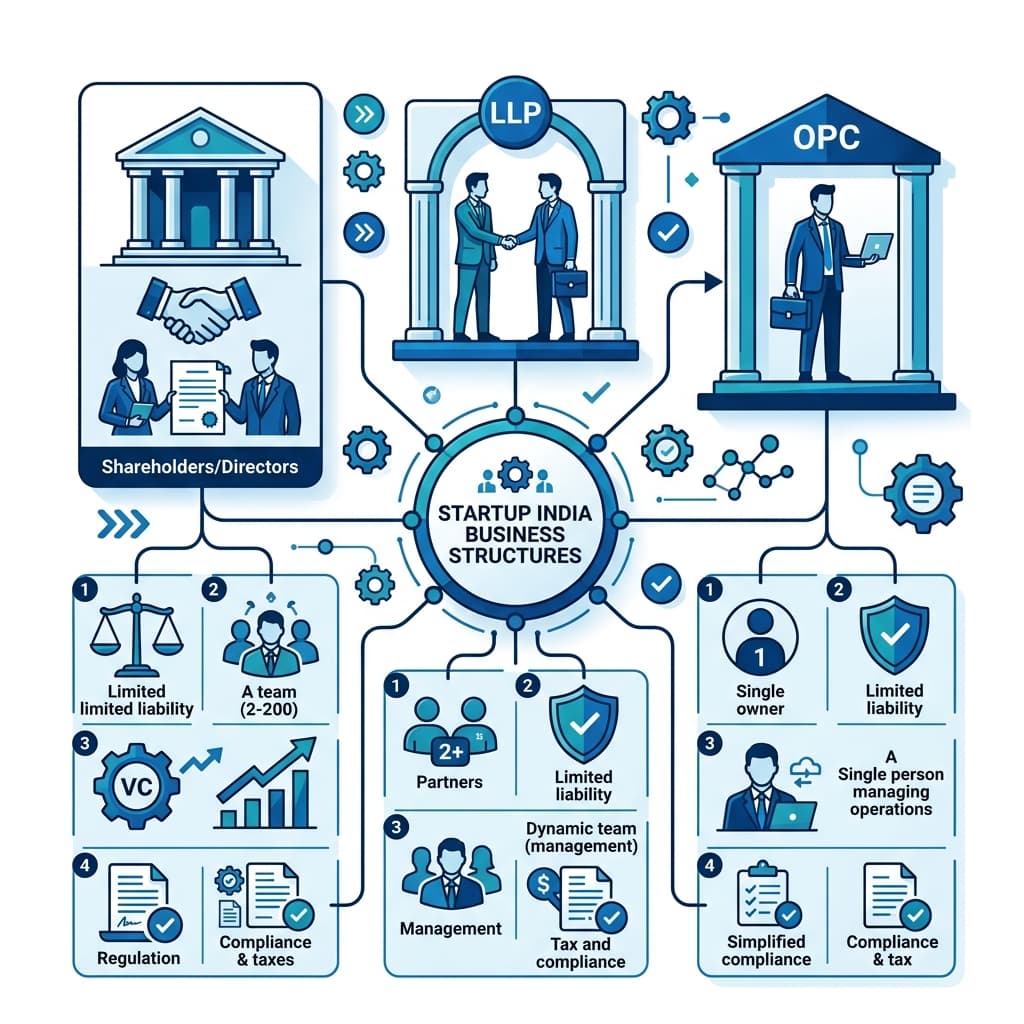
Government fees, professional fees and hidden costs of registering a Private Limited Company, LLP or OPC.
Official sources: Ministry of Corporate Affairs (MCA) · Income Tax Department